
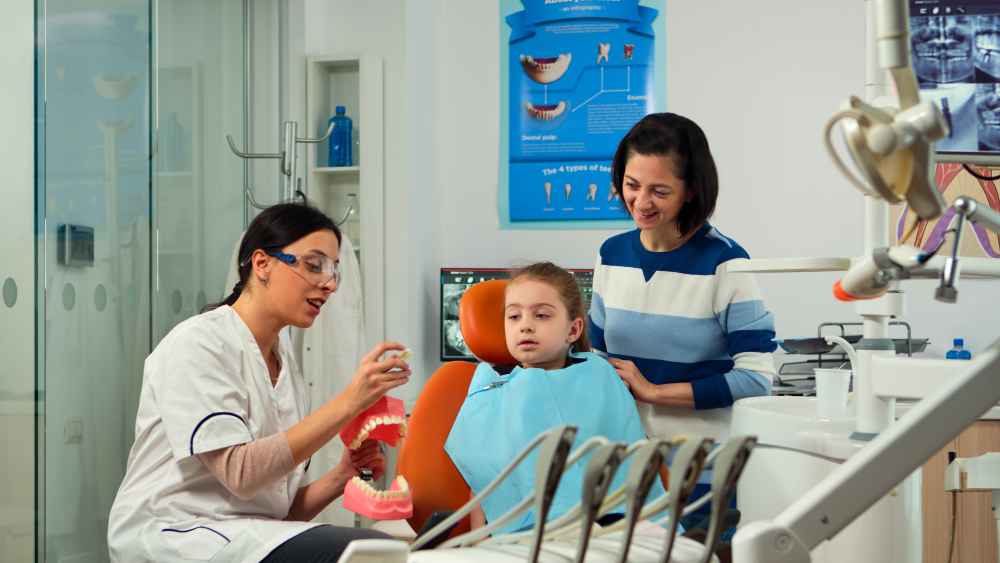
Introduction to Space Maintainers
Space maintainers are special dental devices used in children’s mouths. Dentists use them when a child loses a baby tooth too early. Because baby teeth guide adult teeth into place, losing one too soon can cause problems. Space maintainers help keep the gap open until the adult tooth grows in. This way, they prevent other teeth from moving into the empty space. According to the American Dental Association, space maintainers are safe and effective for children.
Why Space Maintainers Are Important for Children’s Dental Health
When a child loses a baby tooth early, the nearby teeth may shift. As a result, the adult tooth may not have enough room to come in straight. This can lead to crooked teeth or crowding. In many cases, this may cause bite problems or the need for braces later. However, using a space maintainer can help prevent these issues. It keeps the space open and guides the adult tooth into the right spot. Therefore, space maintainers play a key role in keeping children’s smiles healthy and straight.
Types of Space Maintainers
There are two main types of space maintainers: fixed and removable. Dentists choose the best type based on your child’s needs.
How Space Maintainers Are Placed and Maintained
First, the dentist checks your child’s mouth and takes an impression. Next, the dental lab makes a custom space maintainer. Then, the dentist fits and attaches the device. For fixed types, the dentist cements it to the teeth. For removable types, the dentist checks the fit and shows your child how to wear it. After placement, regular dental visits are important. The dentist will check the space maintainer and make sure it works well. In addition, good oral hygiene is needed to keep the device and teeth clean.
Common Questions and Concerns
Parents often have questions about space maintainers. Here are some common concerns:
Prevention and Aftercare Advice
To help your child avoid early tooth loss, encourage good dental habits. For example, brush twice a day, floss daily, and visit the dentist regularly. If your child has a space maintainer, follow these tips:
After the adult tooth comes in, the dentist will remove the space maintainer. This helps keep your child’s teeth healthy and straight as they grow.
Conclusion
Space maintainers are important tools for children’s dental health. They help prevent future problems and keep smiles healthy. If your child loses a baby tooth early, talk to your dentist about the best options. Consult Dr. Sunil Reddy to learn if a space maintainer is right for your child.