
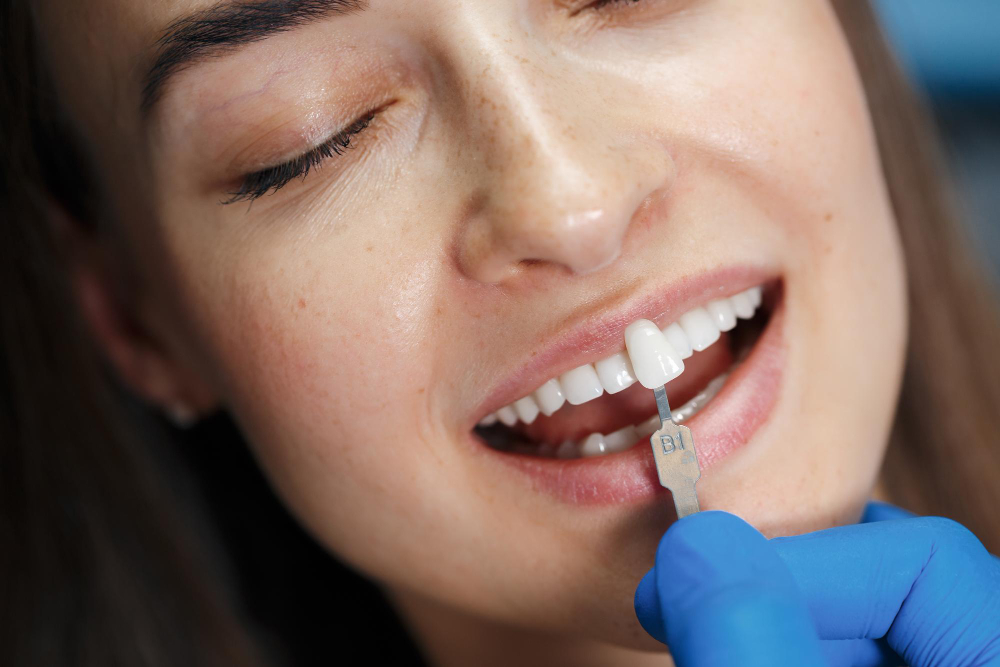
What Are Veneers?
Veneers are thin shells placed on the front of your teeth. Dentists use them to improve the look of your smile. Often, veneers are made from porcelain or resin. Because they look natural, many people choose veneers for chipped, stained, or uneven teeth. Dental veneers are custom-made to fit your mouth. In many cities, you can find clinics that offer veneers for different needs.
Benefits of Veneers
Veneers offer many advantages for your teeth and smile. For example, they can:
Additionally, porcelain veneers resist stains better than natural teeth. With proper care, veneers can last for many years. According to the American Dental Association, veneers are a safe and effective way to improve your smile.
Who Is a Good Candidate?
Not everyone is the right fit for veneers. However, you may be a good candidate if you:
On the other hand, people with gum disease or weak teeth may need other treatments first. Your dentist will check your mouth and discuss your options. In many cases, a simple exam can show if veneers are right for you.
The Veneers Procedure: Step-by-Step
The veneers procedure usually takes two or three visits. Here is what you can expect:
Sometimes, you may get temporary veneers while waiting for the final ones. The whole process is simple and usually does not hurt.
Aftercare and Maintenance Tips
Proper veneers aftercare helps them last longer. Here are some tips to keep your veneers looking great:
In addition, try to avoid drinks that can stain, such as coffee or red wine. If you grind your teeth at night, ask your dentist about a mouth guard. Good care means your veneers can last 10 years or more.
Risks and Considerations
While veneers are safe, there are some risks to consider. For instance, the process is not reversible. Once enamel is removed, it cannot grow back. Also, veneers can chip or crack if you bite hard objects. Sometimes, you may feel tooth sensitivity after the procedure. However, this usually goes away in a few days. The cost of veneers can be high, and most insurance plans do not cover them. Always talk to your dentist about the pros and cons before making a choice.
Frequently Asked Questions
If you want a brighter, more even smile, veneers may be a good choice. However, always consult Dr. Sunil Reddy to find out if veneers are right for you.